Physical Address
304 North Cardinal St.
Dorchester Center, MA 02124
Physical Address
304 North Cardinal St.
Dorchester Center, MA 02124
A luxury designer’s secrets to superior kitchen organization. Learn 20 strategies to create a curated, high-impact culinary space that transcends tidiness.
I promise that your kitchen can be more than just functional; it can be an intentional space of beauty and effortless flow. My entire career has been built on translating the principles of high-end retail display—the silent language of desire, flow, and purpose—into residential spaces. After years of designing and observing, I’ve distilled the process into 20 strategic imperatives that consistently elevate kitchen organization from a chore into an art form. These aren’t temporary fixes or simple decluttering hacks; they are foundational design choices for creating a culinary environment that feels both intuitive and deeply personal.
This is not a checklist, but a philosophical journey. We’ll begin by architecting the space conceptually, understanding the choreography of your movements before a single container is purchased. From there, we transition into the tangible—the precision systems and materials that engineer order. Finally, we’ll establish the elegant habits that sustain this curated environment, ensuring your kitchen remains a testament to intentional living long after the initial design is complete. Think of this as your insider’s guide to creating a kitchen that works as beautifully as it looks.
Before you buy a single organizer, you must think like a designer. A truly elevated kitchen begins not with products, but with principles. It’s about understanding the invisible forces—workflow, function, and aesthetics—that govern the space. This is where we lay the strategic groundwork, transforming your kitchen from a collection of objects into a cohesive and inspiring culinary environment.
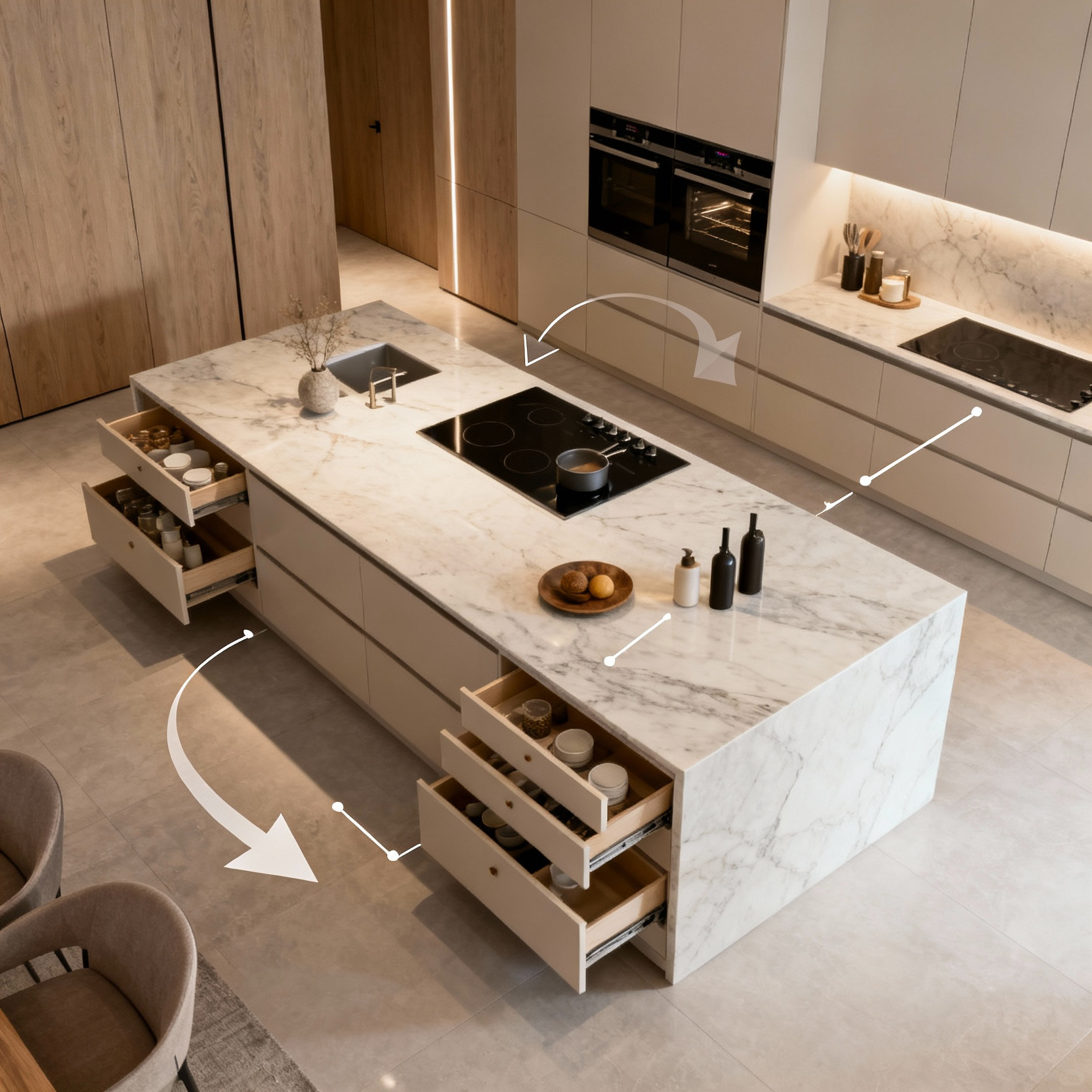
The secret to a kitchen that feels truly effortless isn’t about having the best gadgets; it’s about choreographing movement. A Culinary Activity Audit is the essential first step—a strategic mapping of how you actually cook. Instead of forcing your habits into a pre-conceived layout, this audit shapes the layout around your natural intuition, eliminating wasted steps and friction. It’s a shift from static storage to a dynamic ecosystem that anticipates your next move.
Years of visual merchandising taught me to map the ‘customer journey’ to create an intuitive shopping experience. It’s the exact same principle in a kitchen, only here we call it the ‘culinary journey.’ Your audit involves simply observing yourself. For a few days, notice the paths you trace between the fridge, sink, and stove. Where do you instinctively chop vegetables? Where does the clutter pile up? Sketching these paths on a floor plan reveals your personal workflow, highlighting bottlenecks and opportunities. This data becomes the blueprint for a kitchen that flows with you, not against you.
Once you understand your culinary workflow, you can begin to engineer the space through Zonal Storage. This isn’t just about grouping like items; it’s about creating intelligent “activity hubs” where everything you need for a specific task lives together. Zonal storage is the physical manifestation of your activity audit, a system that makes perfect, intuitive sense because it’s based on your own movements. It’s the difference between a kitchen that simply holds things and one that actively supports your process.
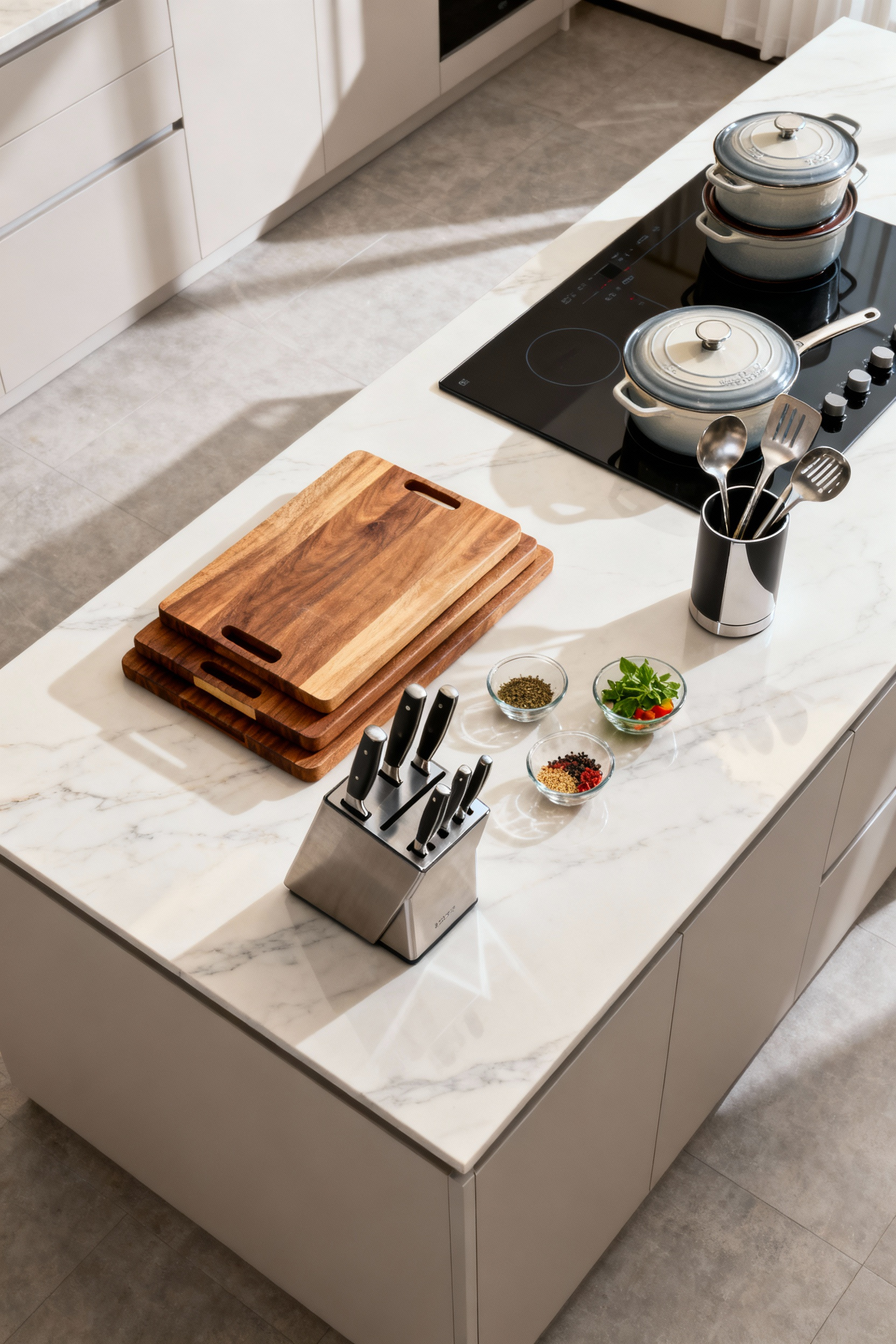
Imagine a baking zone where flours, sugars, mixing bowls, and stand mixer all reside within a single cabinet and its adjacent countertop. A coffee zone with mugs, beans, and the machine all clustered together. Your cooking zone, flanking the stovetop, should have oils, spices, pots, and utensils all within arm’s reach. By designating these zones, you stop traveling across the kitchen for related items. This strategic placement creates pockets of profound efficiency, reducing the cognitive load of cooking and transforming your kitchen into a series of seamless, purposeful workstations.
A kitchen that feels chaotic often suffers from visual, not just physical, clutter. Aesthetic Harmonization is the curatorial principle of creating visual quietude. It’s about ensuring your materials, colors, and textures speak a consistent and intentional language. When the visible elements of your kitchen are unified, the space feels larger, calmer, and more sophisticated, regardless of its size. This is where kitchen organization becomes a true act of design.
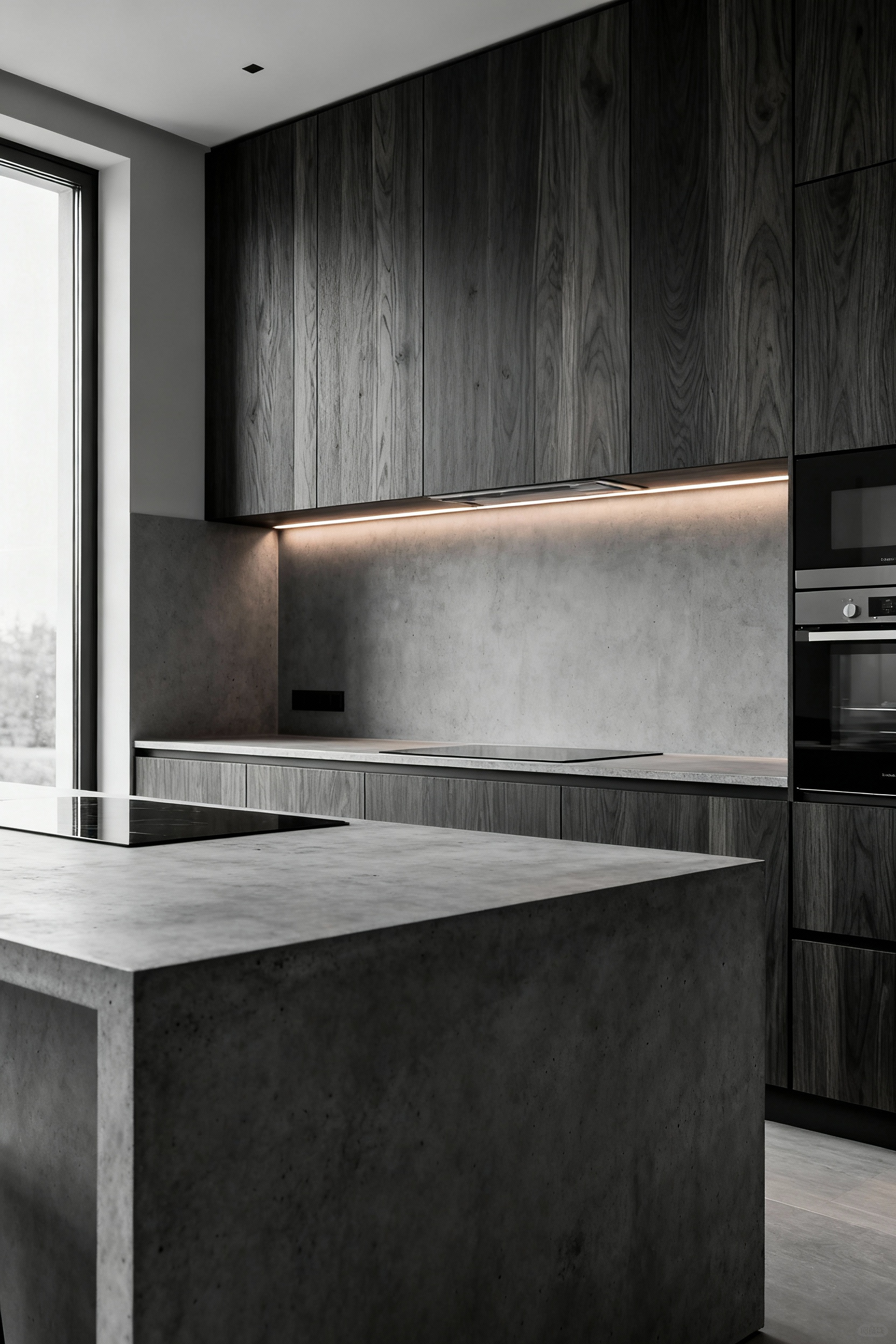
Start by editing your material palette. Instead of five different metal finishes, choose one—perhaps brushed brass or matte black—and carry it through your hardware, faucet, and lighting. Select a consistent material for countertops and backsplash to create a clean, uninterrupted visual line. This extends to your organization tools. If you use countertop canisters or utensil crocks, ensure they align with your chosen palette. If you have open shelving, the items on display are not just stored; they are part of the decor and must contribute to the overall visual story. The goal is to create a serene backdrop where the culinary action can take center stage.
After grounding the kitchen in aesthetic harmony, the designer’s eye looks up. The most underutilized dimension in any room is its height. Leveraging verticality is a strategic move that transforms unused airspace into prime storage and display real estate. It’s an essential principle that works against the horizontal spread of clutter, drawing the eye upward and making the entire room feel more expansive and dynamic. This is how you reclaim your valuable counter space.
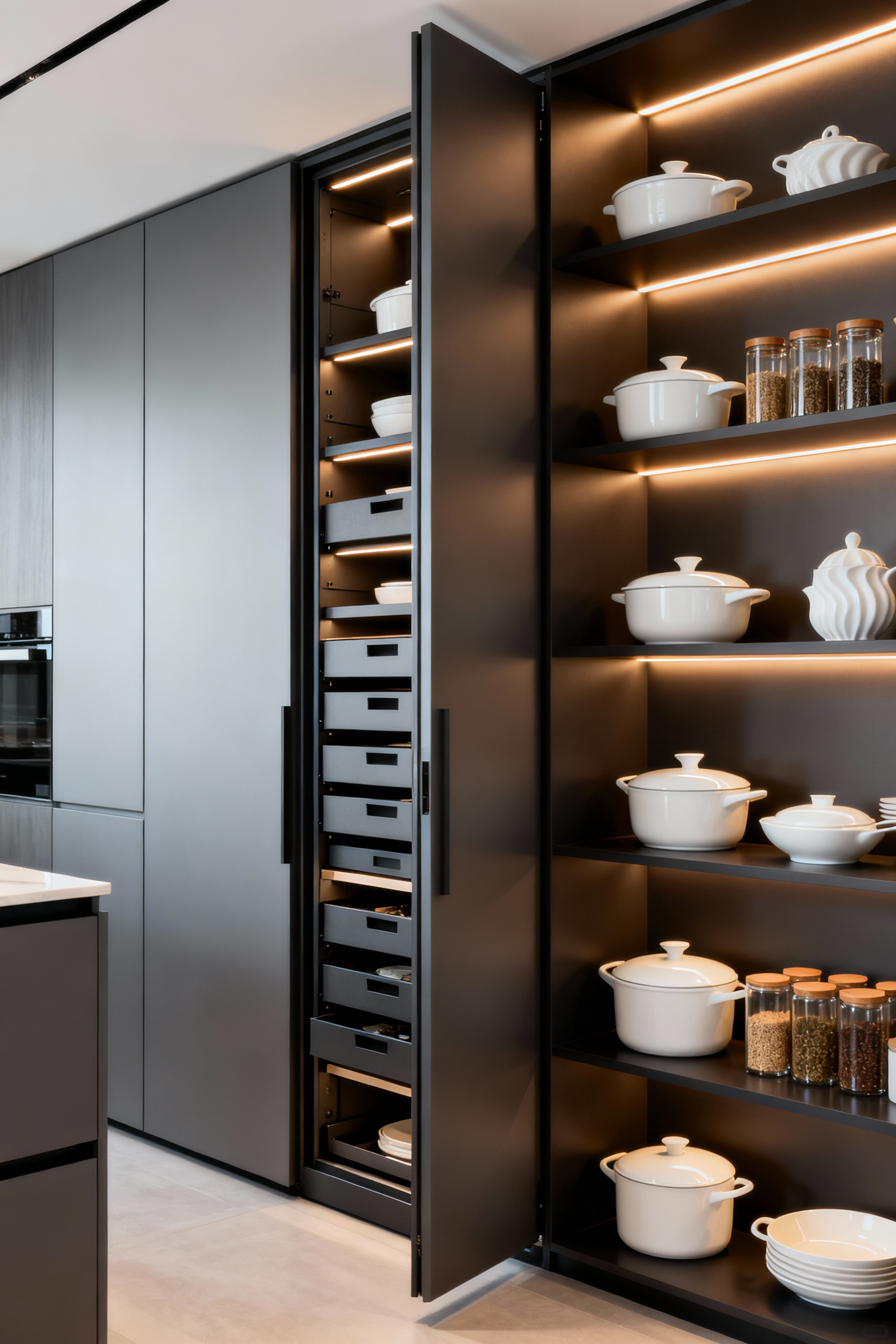
What I’ve seen in countless luxury build-outs is that a room’s perceived value increases when the eye is guided upward. Leveraging verticality in a kitchen isn’t just about storage; it’s about elevating the entire space. Think beyond upper cabinets. Consider installing a sleek rail system below your cabinets to hang frequently used utensils, a magnetic knife strip to free up a drawer, or a single, beautifully styled floating shelf for glassware. Taking cabinetry all the way to the ceiling not only maximizes storage for less-used items but also creates a clean, architectural line that eliminates that awkward, dust-collecting gap. It’s about three-dimensional thinking—every cubic inch of your kitchen has potential.
With our foundational philosophies established, we now refine our focus. This is about applying a discerning, curatorial eye to every corner and every item within the kitchen. We will move from broad concepts to granular decisions, ensuring that the logic of our design is implemented with precision and intention.
Think of your countertop and most accessible cabinets like the front window of a flagship store. You don’t display backstock there; you showcase what’s most valuable, beautiful, and in-demand. Adopting a ‘Prime Real Estate’ valuation for your kitchen means you treat this accessible space as a finite, precious resource. Every item must earn its place. Does its frequency of use and its aesthetic contribution justify its position? This isn’t about hiding things away; it’s a strategic act of placement that optimizes flow and celebrates your most-used tools.
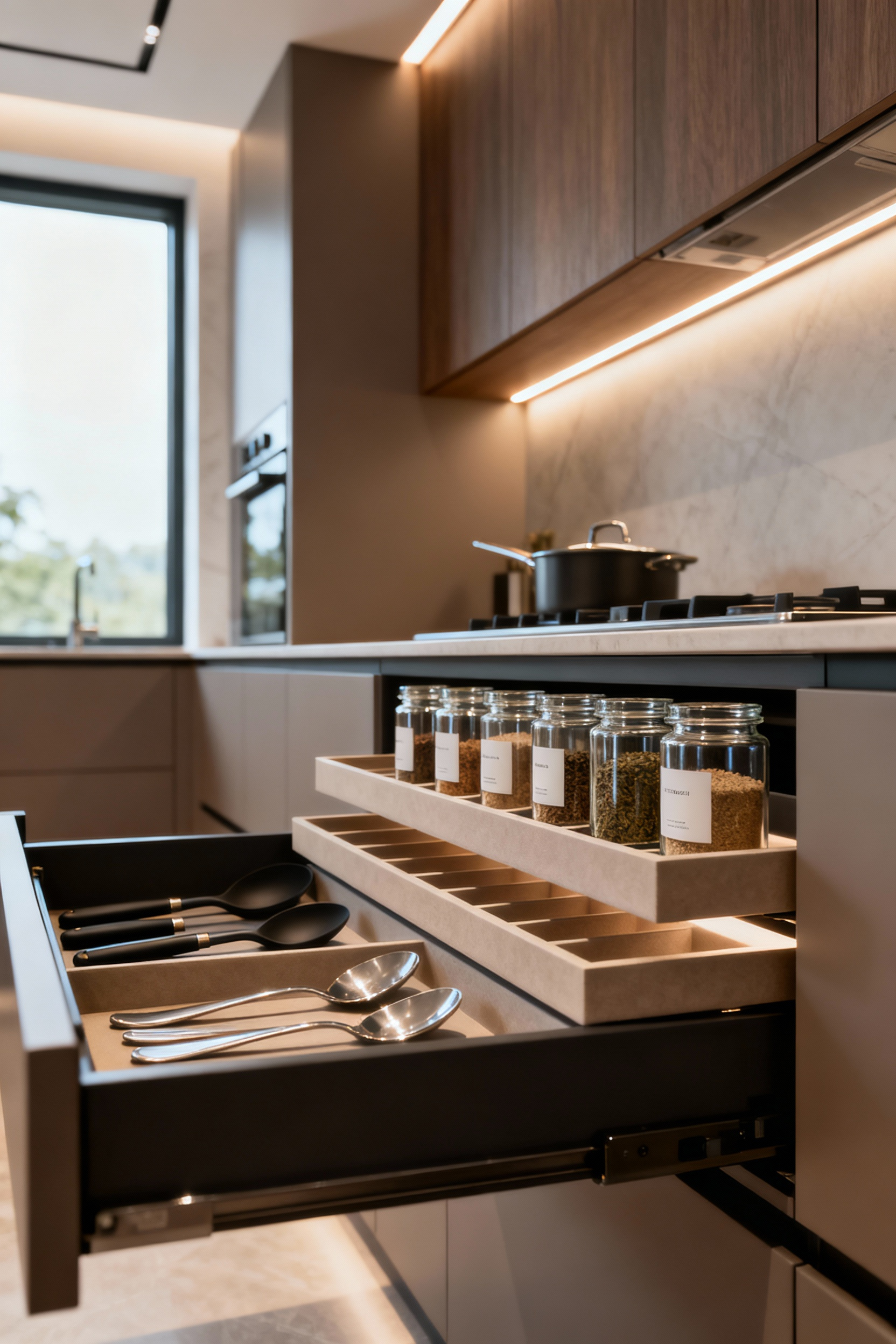
Your daily essentials—the chef’s knife you always reach for, your favorite olive oil, the pan you use every morning—belong in the “A-Zone,” within immediate arm’s reach of your primary prep area. Items used weekly can move to the “B-Zone,” perhaps a higher shelf or a drawer that’s a step away. Seasonal or rarely used items are relegated to the “C-Zone”—the highest cabinets or the back of the pantry. This tiered system ensures your daily rituals are seamless and free of friction. You’re no longer searching, you’re simply reaching. It’s a small shift in thinking that yields a huge return in daily efficiency and calm.
Here we move from abstract philosophy to tangible execution. An intelligently designed kitchen relies on systems that work behind the scenes to create an effortless experience. This is about engineering order with precision hardware and thoughtful solutions that transform static boxes into dynamic, high-performance storage.
Cabinets are the architecture of your kitchen, but it’s their internal mechanics that determine their true value. Without intelligent systems, a cabinet is just a dark box where items get lost. Calibrating your cabinetry with custom dividers and pull-out mechanisms transforms it from passive storage into an active, responsive system. Every inch becomes purposeful and, most importantly, accessible.
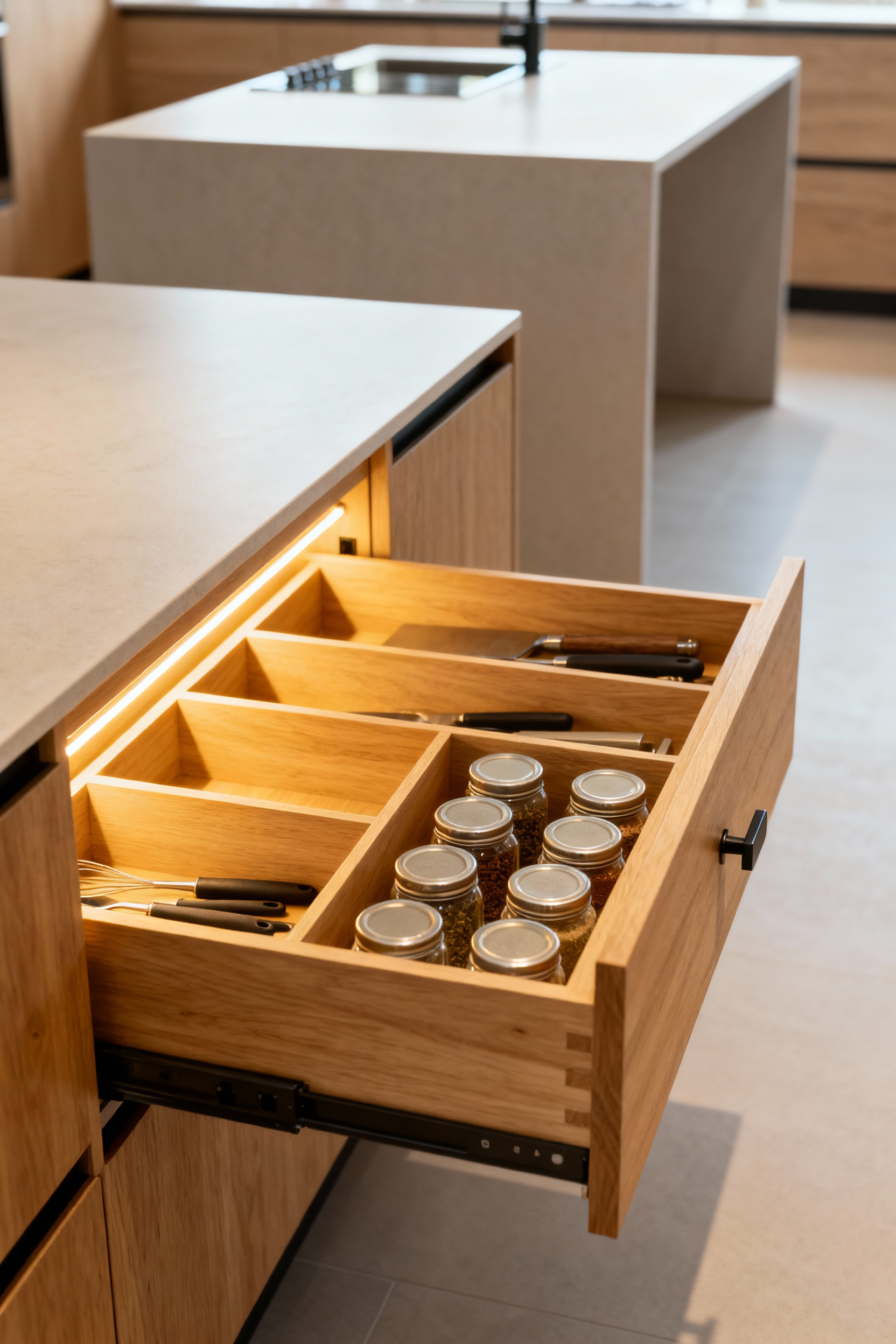
I learned early in my career designing high-end retail displays that what’s behind the scenes is just as important as the presentation. A messy stockroom leads to a messy sales floor. Your cabinets are your kitchen’s stockroom—their internal logic dictates the calm of your countertops. Deep base cabinets, notorious for being black holes, are revolutionized by full-extension pull-out shelves that bring the contents to you. No more kneeling to search for a pot in the back. Tall pantry cabinets become models of efficiency with vertical dividers for trays and baking sheets, ensuring they stand upright and are easily grabbed. It’s an investment in a smoother, more ergonomic daily experience.
Drawers are where the micro-details of kitchen organization truly shine. An optimized drawer is a thing of beauty and a powerhouse of efficiency. Moving beyond the simple plastic tray to modular inserts and tiered systems transforms a potential jumble into a perfectly orchestrated display of tools. Opening a well-organized drawer should provide a quiet moment of satisfaction, a small luxury that elevates the entire cooking process.
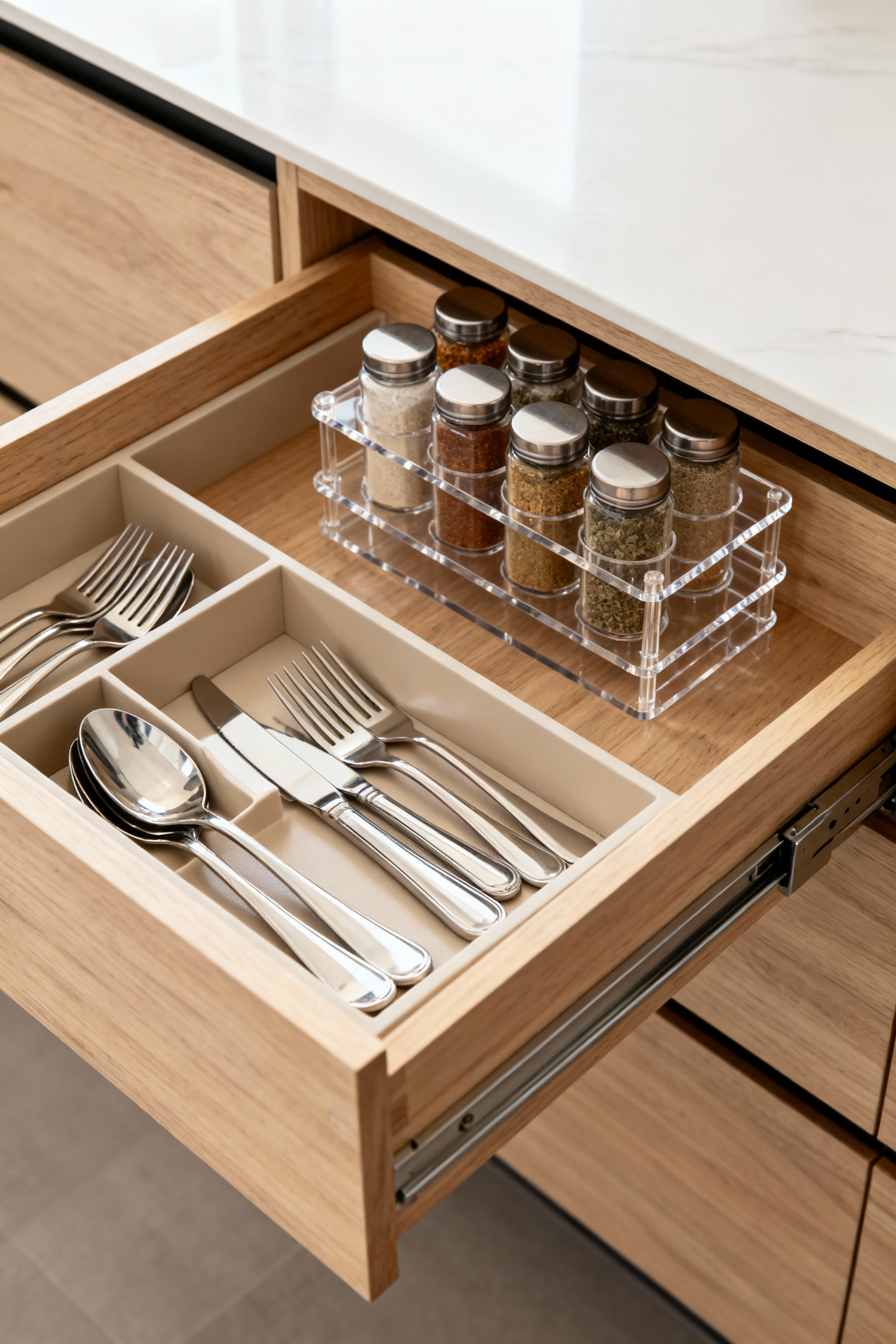
Look for modular inserts—in beautiful materials like bamboo or walnut—that can be configured to perfectly fit your utensils. This prevents the chaotic slide and clatter every time you open the drawer. For spices, an angled, tiered insert is non-negotiable; it turns a confusing collection of jars into a legible file system. Even the dreaded utility drawer can be tamed with a grid of small, interlocking containers. By giving every small item a designated home, you eliminate the mental friction of searching and allow yourself to stay focused on the creative task at hand.
Strategic decanting is one of the most impactful visual merchandising tricks you can bring into your home. It’s the act of removing the visual noise of mismatched, branded packaging and replacing it with the serene harmony of uniform vessels. This isn’t just an aesthetic choice; it’s a powerful organizational strategy. By decanting staples like flour, pasta, grains, and spices into clear, airtight containers, you create immediate visual cohesion while also gaining a clear and instant understanding of your inventory.
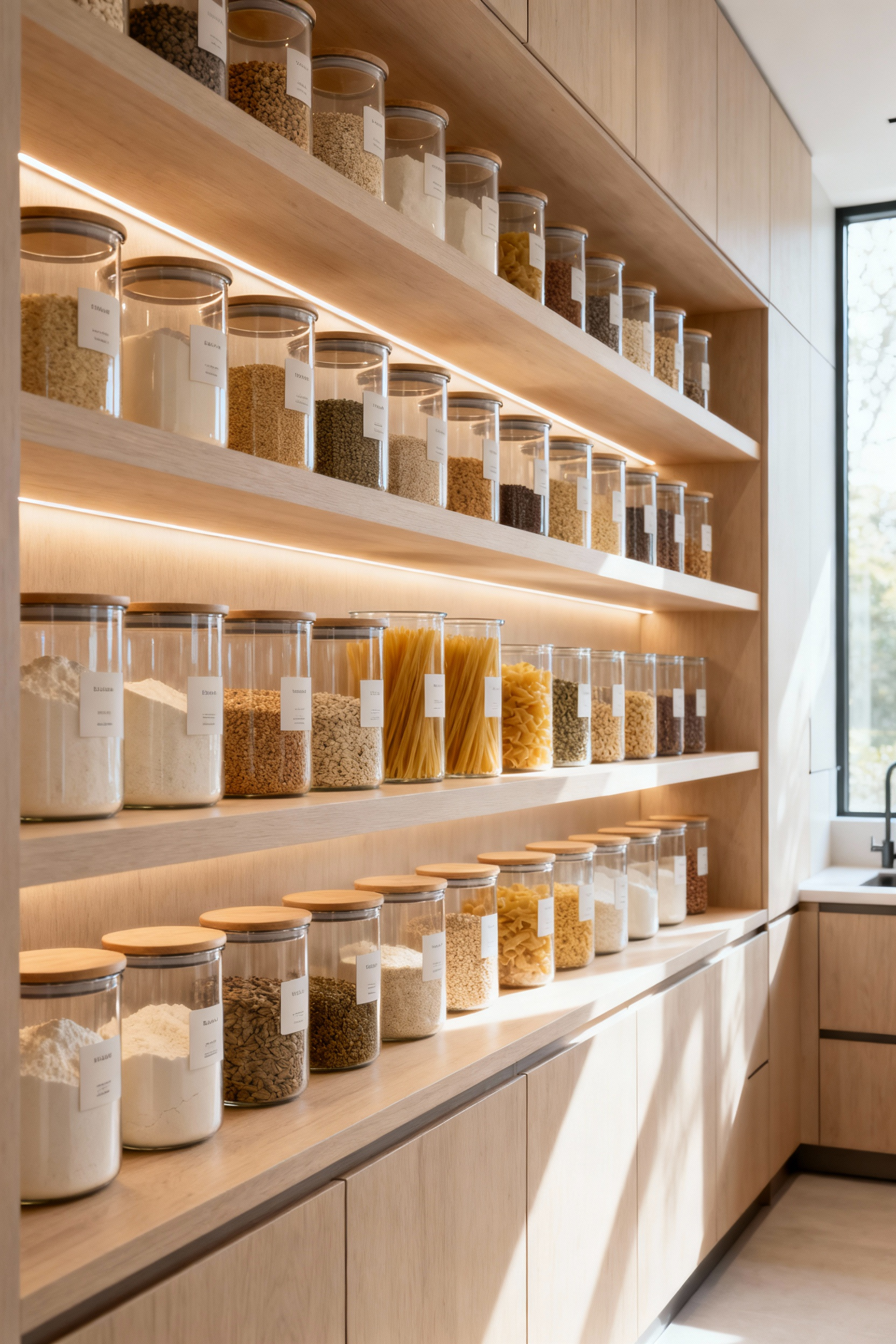
Choose a set of glass or clear acrylic containers and stick with them. The consistency in form is what creates that calm, curated look on a pantry shelf or even on the countertop. You can see at a glance when you’re running low on something, which prevents both overbuying and running out mid-recipe. Add a simple, elegant label to each container. This practice transforms your pantry from a chaotic commercial landscape into a calm, personal larder that feels both luxurious and profoundly practical.
Rethink your walls. They aren’t just structural supports; they are vertical canvases for organization. Deploying dynamic wall-mounted systems is about converting underutilized real estate into active, ergonomic storage. This strategy liberates your countertops, keeping essential tools visible and within immediate reach, turning them into part of your kitchen’s functional decor. A well-placed wall organizer is both a workhorse and a piece of art.
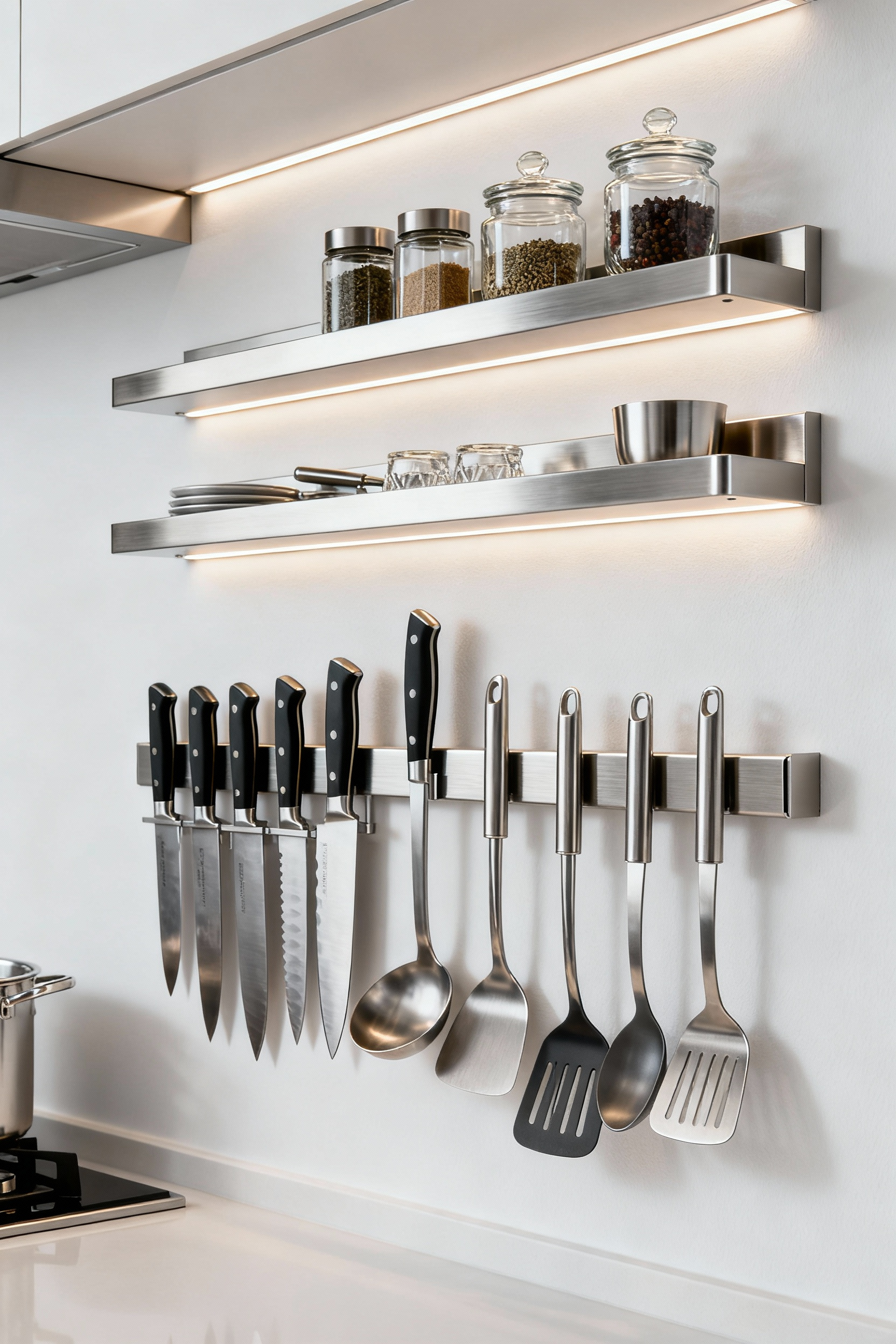
Consider a sleek metal rail system with S-hooks for utensils, a small shelf for oils, and a basket for garlic and shallots, all positioned right next to your cooktop. A powerful magnetic knife strip not only saves precious drawer space but also displays your beautiful blades safely. I love seeing clients embrace a beautifully curated pegboard for hanging pots, pans, and tools—it’s an adaptable, industrial-chic solution. By moving items off the counter and onto the wall, you create an interactive and efficient backsplash that makes your entire workspace feel more open and ready for action.
We continue our dive into the material choices and design decisions that create a high-performance culinary space. These are the details that support the broader systems we’ve put in place, ensuring every component of your kitchen contributes to an experience of seamless efficiency.
The choice of storage canisters is a critical curatorial decision. This goes far beyond simple containment; it is a commitment to preserving the quality and integrity of your ingredients. High-performance canisters with truly airtight seals are the guardians of freshness, protecting your investment in quality food from air, moisture, and pests. This isn’t just about looking organized; it’s about a fundamental respect for your ingredients.
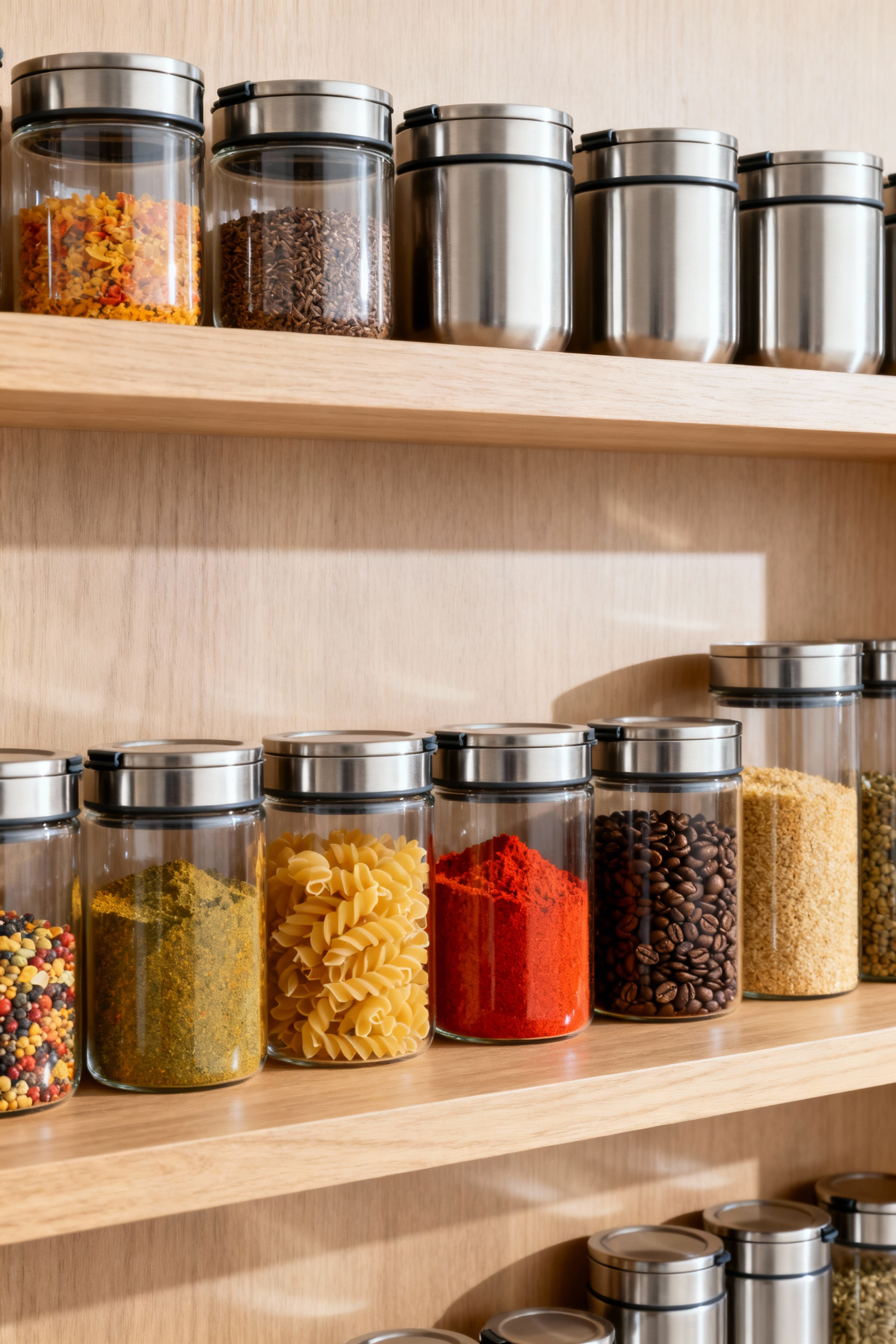
I often advise clients to think of their pantry goods like a collection. If you had a collection of beautiful objects, you wouldn’t keep them in their original flimsy packaging. You’d house them in a way that honors their value. Do the same for your ingredients. Invest in canisters made from borosilicate glass or high-quality BPA-free materials, but pay closest attention to the seal. A robust silicone gasket or a latch-and-lock system is non-negotiable. Their modular and stackable design creates a space-efficient schema in your pantry, transforming it into a visually harmonious and functionally superior library of culinary goods.
A sophisticated kitchen operates like a series of interconnected, specialized ecosystems. “Architecting Microclimates” means we treat each zone—the pantry, the refrigerator, the under-sink area—as a distinct environment with its own unique needs and challenges. By designing with precision for each zone, we create a kitchen that functions at the highest level of efficiency and care.
Your pantry should be more than a closet for food; it should be a dynamic inventory control center. To achieve this, we borrow a core principle from retail logistics: First-In, First-Out (FIFO). This simple system ensures that older items are used before newer ones, dramatically reducing food waste and guaranteeing you’re always cooking with ingredients at their peak. It is a mindful, sustainable practice that brings professional-level efficiency into the home.
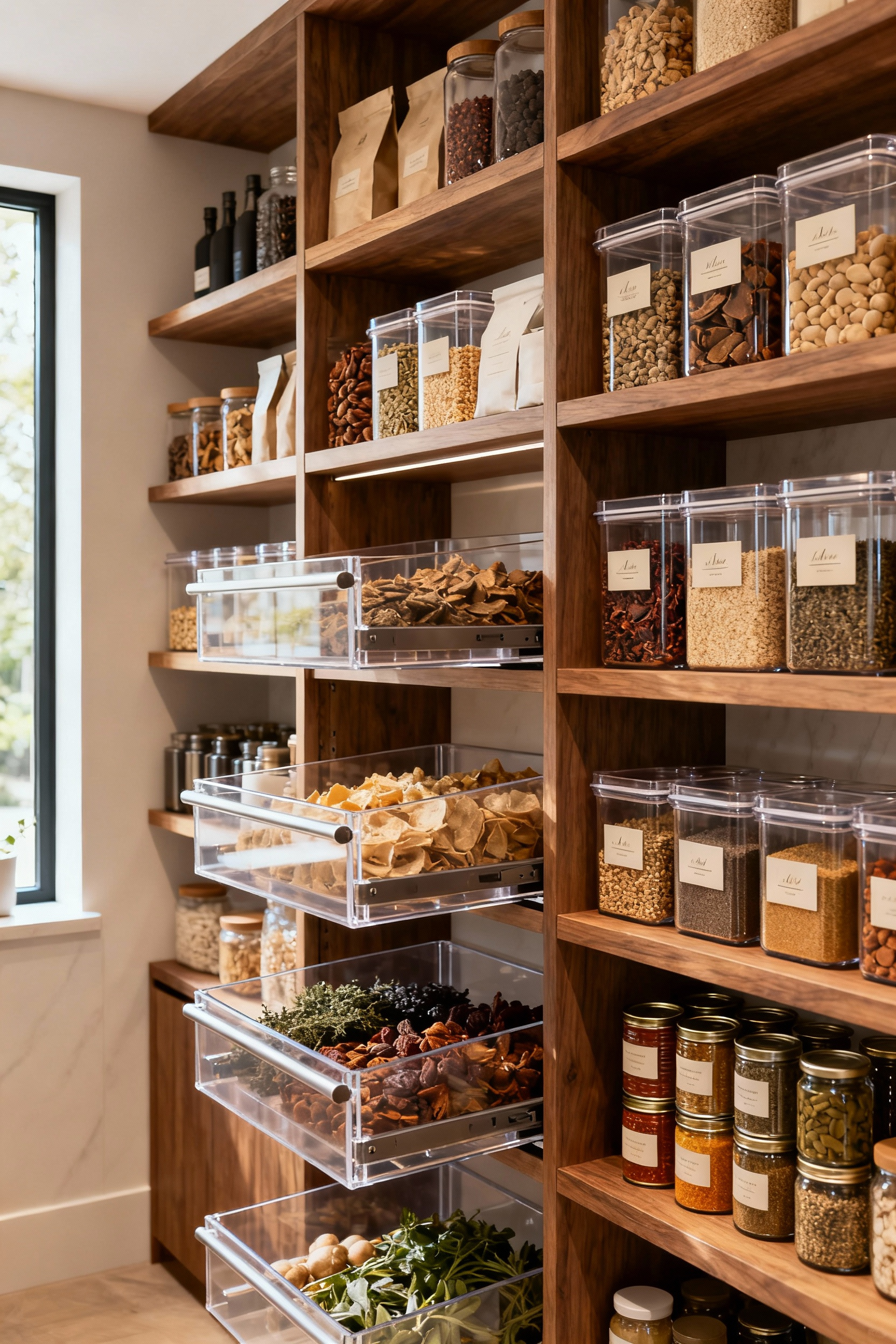
To implement FIFO, simply slide older items to the front when you bring in new groceries. This works best when you’ve already decanted goods into clear, uniform containers that can be easily shifted. For canned goods, a gravity-fed can rack organizer does the work for you. Applying clean, clear date labels upon entry solidifies the system. This practice transforms your pantry from a passive storage space into an active, intelligent system that saves money and respects the food you buy.
The refrigerator is a high-tech preservation chamber that demands its own organizational science. A streamlined refrigerator is not just about aesthetics; it’s about creating the optimal conditions to extend the life of your fresh foods. By using clear containers and designated zones, you create a visually inspiring landscape that also happens to be a model of food science.
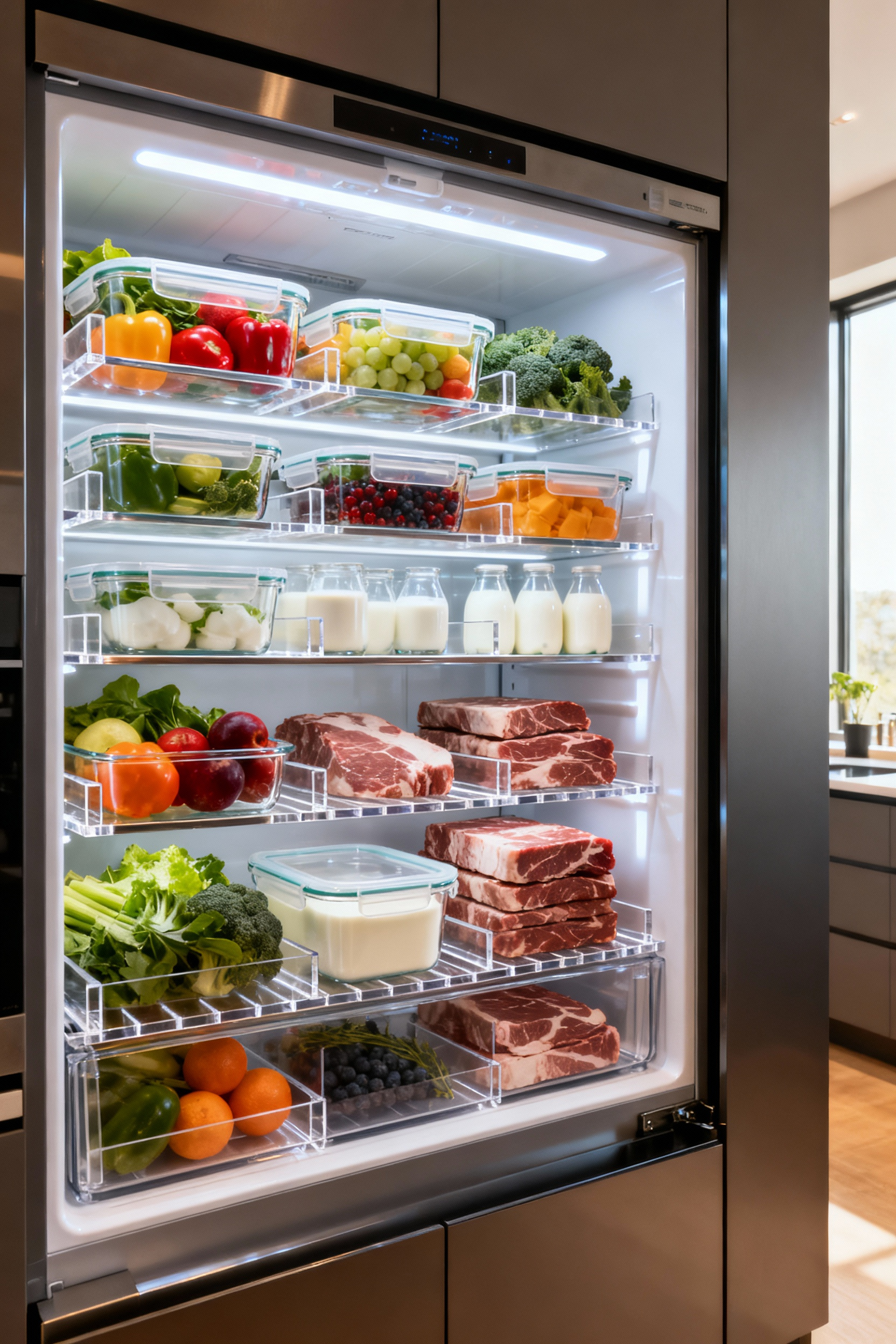
Group like items together in clear, stackable bins: one for yogurts and dairy, another for deli meats and cheeses. This containment strategy prevents cross-contamination and makes finding things effortless. Understand the temperature zones of your fridge—the door is the warmest (best for condiments), while the back of the bottom shelf is the coldest (ideal for raw meat and fish). Using your crisper drawers correctly—one set for high humidity for leafy greens, one for low humidity for fruits—can extend the life of your produce by days. A beautiful fridge inspires healthier choices because you can actually see the vibrant, fresh food you have on hand.
The cabinet under the sink is often the most neglected and chaotic space in the kitchen, but it’s a critical hub for hygiene. Reconfiguring this challenging space with intention is a mark of true organizational mastery. It’s about creating an ergonomic, safe, and instantly accessible station for all cleaning supplies. An orderly under-sink area brings a sense of calm to the entire kitchen’s maintenance routine.
Start by installing a waterproof liner to protect against drips. Then, work around the plumbing with smart solutions like a two-tiered pull-out shelf or expandable organizers. Use clear caddies to group supplies—one for dishwashing, one for surface cleaning—so you can grab the entire kit at once. Leverage the inside of the cabinet doors with over-the-door holders for sponges, gloves, or trash bags. By creating a logical home for every bottle and brush, you turn a frustrating jumble into a model of streamlined efficiency.
Heavy bakeware and bulky small appliances can be the biggest hurdles to a smooth workflow if they’re not stored properly. Optimizing storage for these items is about creating effortless access, removing the physical barriers that might keep you from pursuing a spontaneous culinary project. When your tools are easy to retrieve, you’re more likely to use and enjoy them.
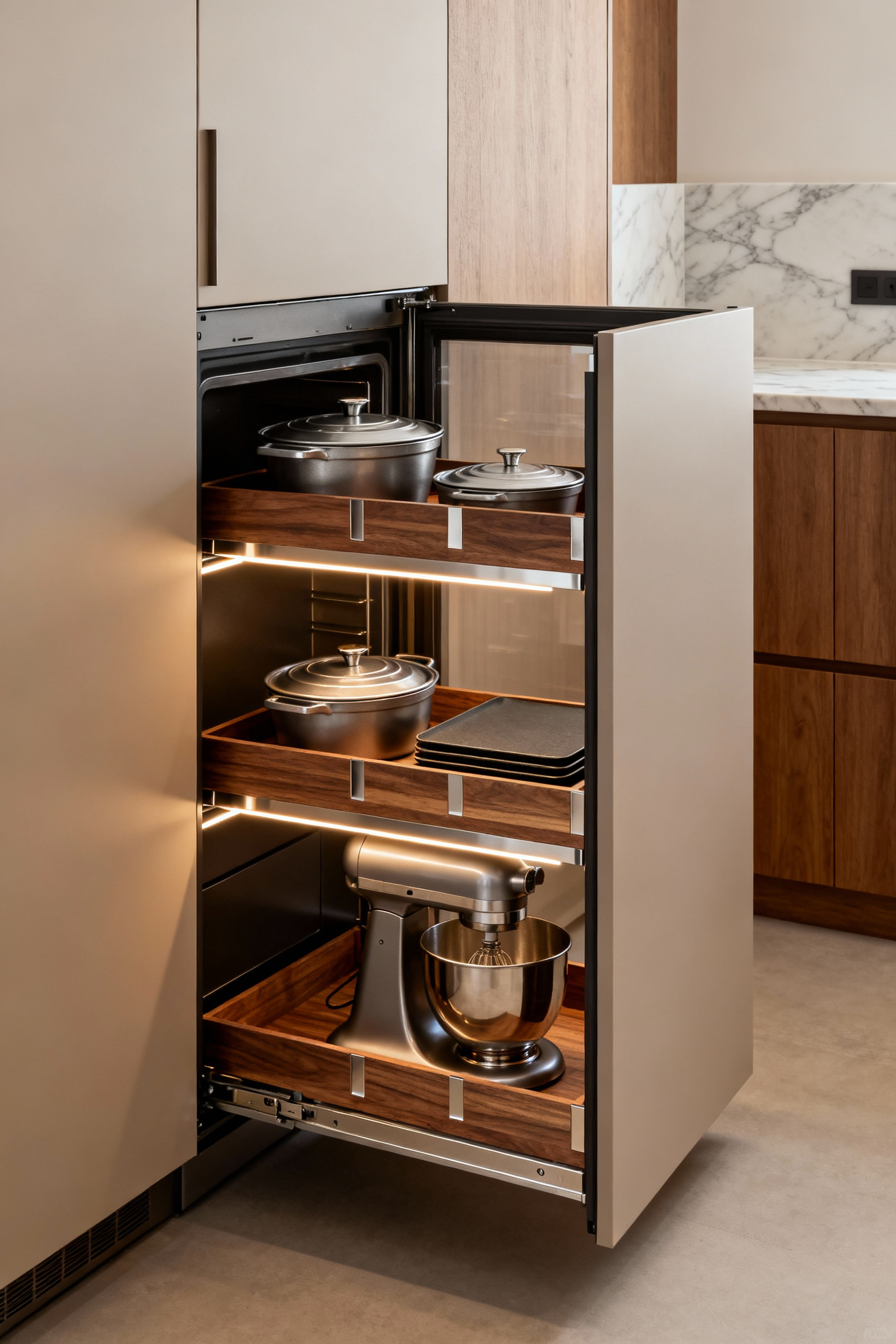
From my work in display design, I know that the easier it is to access something, the more it gets used. An appliance garage isn’t about hiding things; it’s about creating a launchpad for creativity. For bakeware, ditch the precarious stacks. Use vertical dividers inside a deep drawer or a base cabinet to file away baking sheets, muffin tins, and cutting boards so they can be slipped out individually. For heavy items like a stand mixer, consider an appliance lift mechanism that swings up from a base cabinet to counter height. An “appliance garage”—a countertop cabinet with an outlet inside—is the ultimate solution for keeping items like toasters and blenders plugged in but out of sight.
Building on our microclimate approach, we now focus on the active workstations within the kitchen. This is where the principles of zoning and flow culminate in highly optimized areas designed for specific culinary tasks, turning your kitchen into a true high-performance workspace.
The French culinary principle of mise en place—everything in its place—is a philosophy that can be built directly into the architecture of your kitchen. Curating dedicated workstations is about designing micro-environments where all the tools and ingredients for a specific task are anticipated and pre-positioned. It’s the ultimate expression of proactive organization, creating a kitchen that feels less like a series of stations and more like a fluid, intuitive stage for cooking.
Your primary prep station should be an island of pure efficiency, located between the sink and the stove, with knives, cutting boards, mixing bowls, and a compost bin all within a step or a pivot. A dedicated baking station might have a marble countertop that stays cool for dough, with flour and sugar in drawers directly below. A beverage station can centralize your coffee maker, tea kettle, mugs, and sweeteners. By designing the space around the task, you create an ergonomic ballet where every movement is purposeful and every tool is exactly where it needs to be.
An impeccably designed kitchen is only half the victory. The other half is cultivating the habits that maintain that sense of order and elegance over time. These are the daily and seasonal rituals that prevent organizational entropy, ensuring your kitchen remains a sanctuary of calm and control.
The most powerful habit for sustaining an organized kitchen is the Daily Reset. This is a non-negotiable, 10-minute ritual at the end of the day to restore your kitchen to its state of readiness. It’s a commitment to yourself that you will always wake up to a clean slate, a calm and inviting space that inspires a great start to the day rather than reminding you of yesterday’s work.
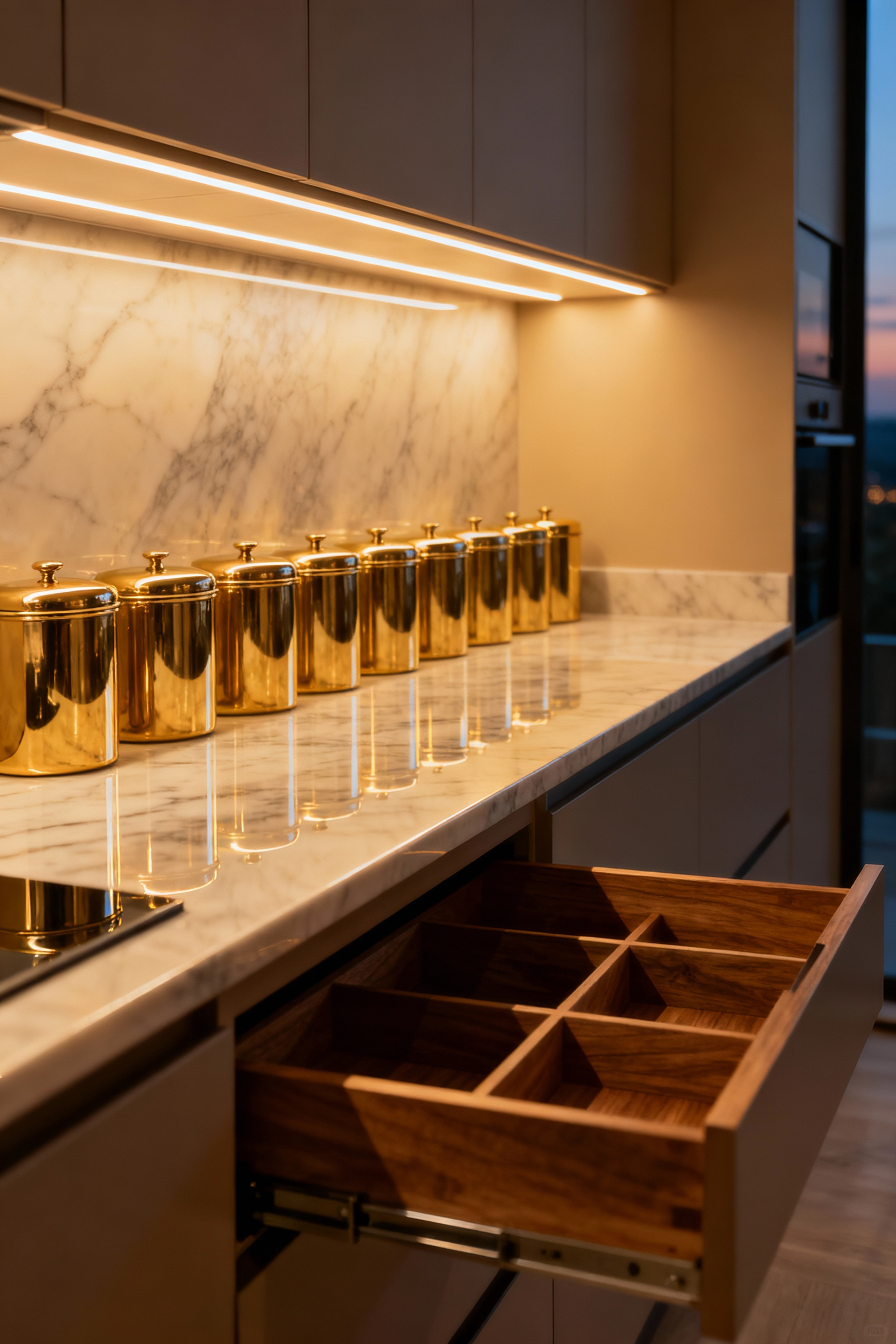
In luxury retail, the end-of-day ‘store recovery’ is a non-negotiable ritual. It ensures the space feels fresh and full of possibility every single morning. Your kitchen deserves the same respect; the daily reset is your personal recovery ritual. This involves more than just loading the dishwasher. Wipe down all counters and the cooktop. Put away any stray ingredients. Hang up the dish towel. By closing the door on the day’s activities, you prevent small messes from compounding into overwhelming clutter and ensure your kitchen’s visual harmony is never compromised.
A curated space is an edited space. The One-In, One-Out rule is a simple but powerful imperative for maintaining that essential discipline. It dictates that for every new item that comes into your kitchen—whether it’s a new spatula, a mug, or a small appliance—a similar, older item must go out. This strategy turns the passive act of acquiring into a conscious, curatorial choice.
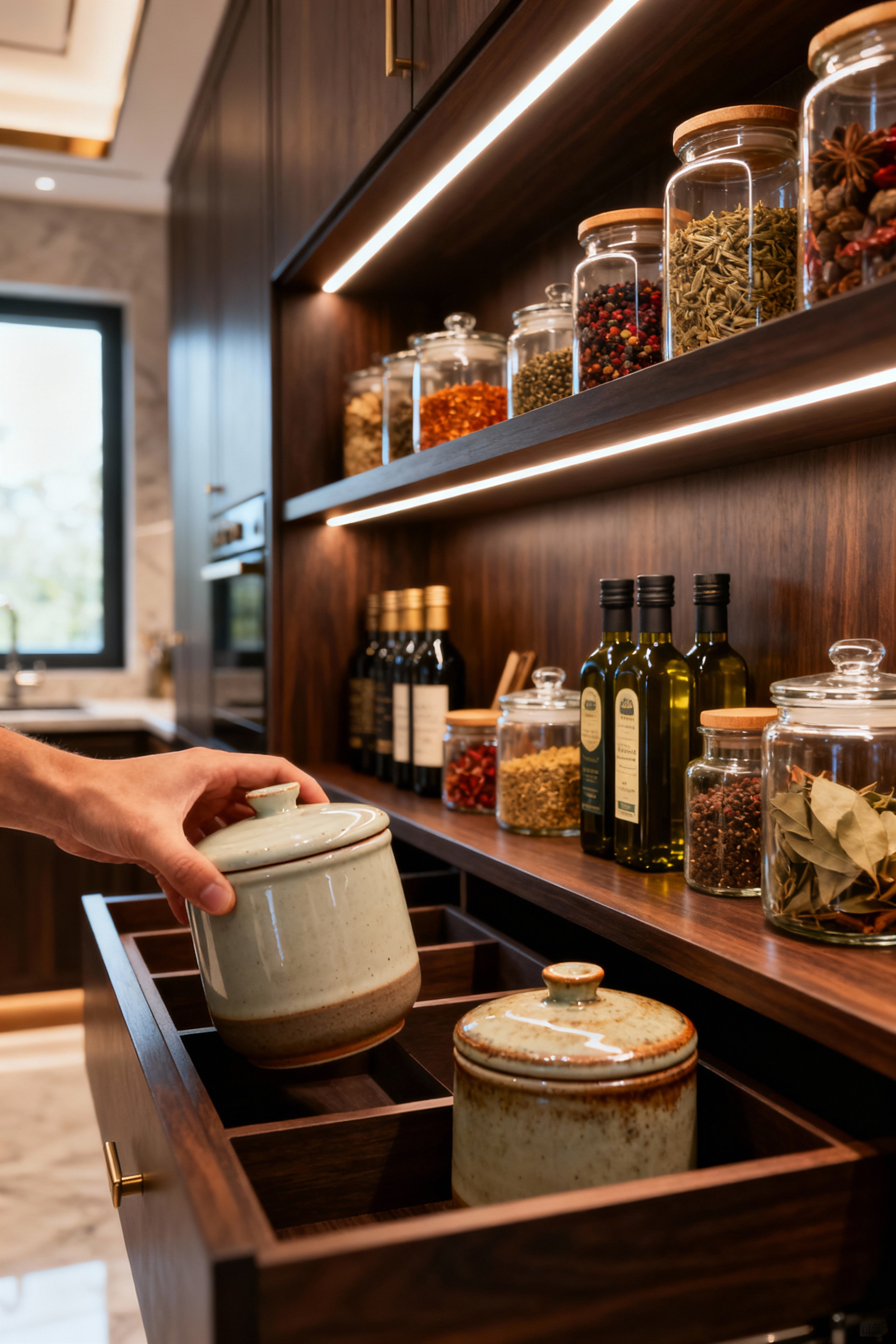
This rule forces a moment of reflection before you purchase. Do you really need it? Is it a true upgrade over what you already have? It’s the ultimate defense against the slow, steady creep of redundancy and clutter. Applying this principle consistently ensures that your kitchen’s inventory remains optimized, purposeful, and free of the excess that can bog down even the best organizational systems.
Just as a boutique re-merchandises for a new season, your kitchen benefits from a periodic, deep reassessment. The biannual purge is a scheduled opportunity to audit everything, adapting your kitchen’s organization to your evolving needs and lifestyle. Our culinary habits change, so our kitchen systems should be agile enough to change with us.
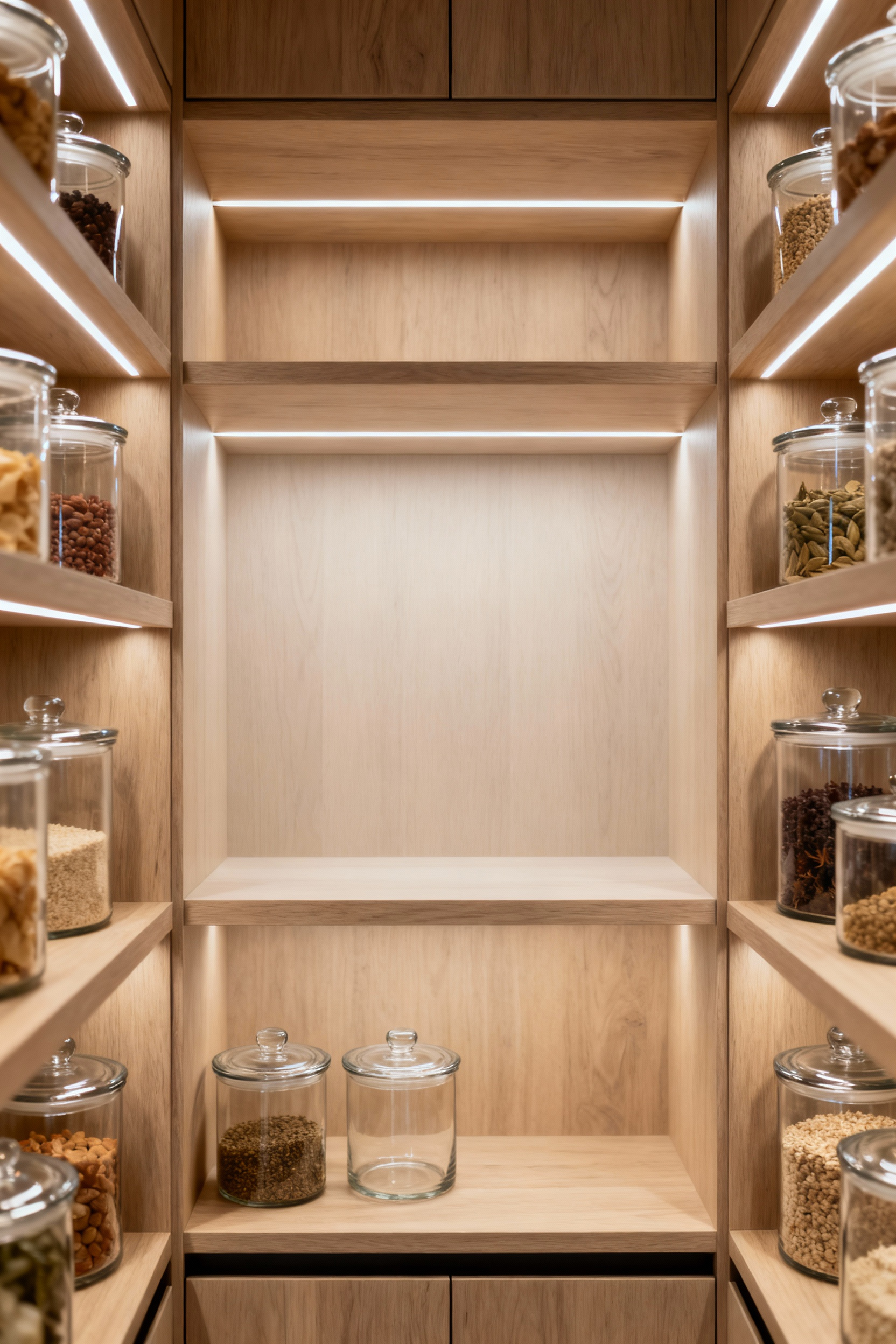
Twice a year, go through every cabinet and drawer. Be ruthless. Check expiration dates on spices and pantry goods. Evaluate gadgets you haven’t used. Are your storage solutions still working for you, or do your needs require a new configuration? This practice is not just about getting rid of things; it’s a strategic recalibration that ensures your kitchen remains perfectly aligned with how you live and cook right now.
For those who truly want to master their culinary domain, digital inventory management is the final frontier. Leveraging a simple app or spreadsheet provides a powerful, macro-level view of your entire kitchen ecosystem. This is the same logic that powers the most efficient retail operations, brought into the home. It’s a shift from reactive shopping to predictive, data-informed stewardship.
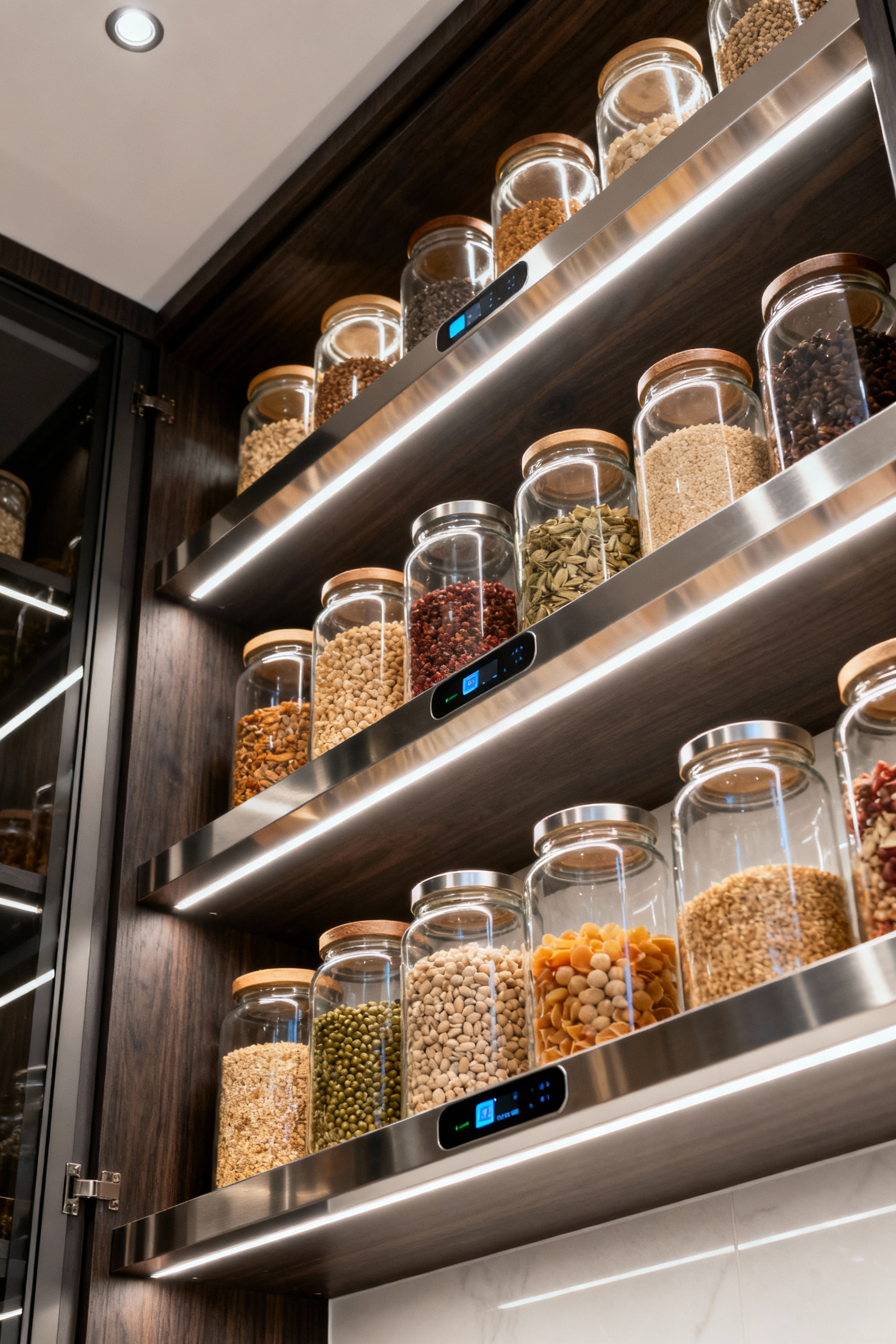
Use an app to track what’s in your pantry, freezer, and even your spice drawer, complete with expiration dates. Your shopping list can then be generated automatically based on what you’ve used and what’s nearing its end. This eliminates impulse buys, reduces food waste, and gives you an unprecedented level of control and foresight. It’s the ultimate tool for running your kitchen with the serene efficiency of a professional.
We conclude with a final, crucial habit. This is a system designed to handle the inevitable daily influx of items that don’t have a natural home in the kitchen, protecting your curated space from the chaos of everyday life.
Every home needs a strategy for managing “transitional clutter”—the daily influx of mail, keys, sunglasses, and receipts that can quickly overtake a kitchen counter. A designated Command Center is an elegant, intentional solution. This is not a junk drawer. It is a thoughtfully designed landing zone that contains this ephemeral clutter, preserving the serene, uncluttered vistas of the rest of your kitchen.
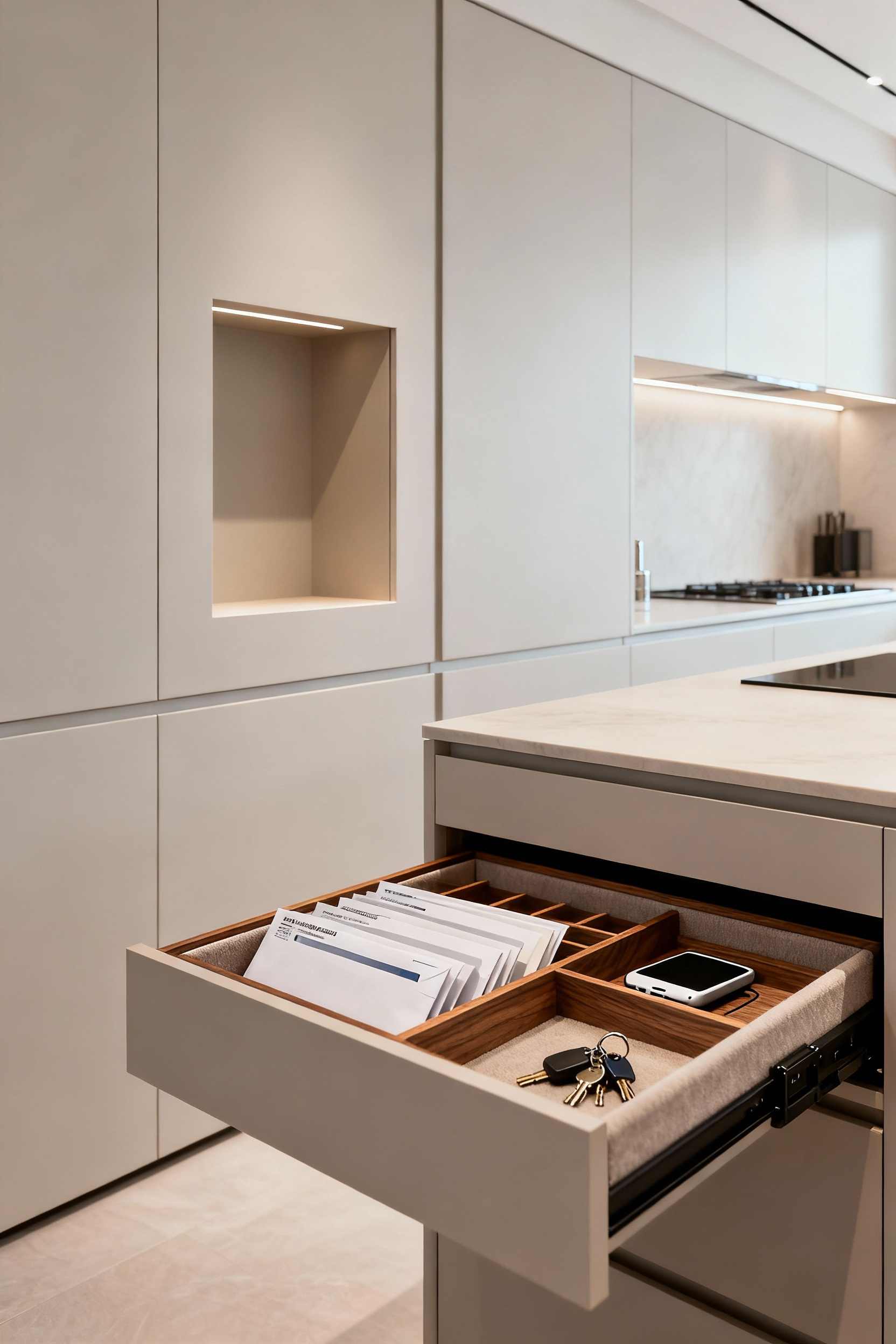
I’ve noticed that the most serene homes I design all have one thing in common: a masterful handle on transitional clutter. This ‘Command Center’ isn’t a new idea—it’s what hotels call a valet tray. It’s a designed moment for chaos. Choose a beautiful tray, a set of nesting boxes, or a stylish wall-mounted file holder, and place it in a logical spot near the entry to your kitchen. Make it a habit to immediately place these transitional items here. By giving this inevitable clutter a beautiful and deliberate home, you protect your culinary workspace and maintain that critical sense of effortless order.
By weaving these twenty imperatives into the fabric of your kitchen, you have done far more than simply organize; you have curated. You have applied the strategic eye of a designer to create a space that is not only visually stunning but profoundly functional and deeply personal. We have moved from the grand philosophy of spatial flow to the minute details of drawer dividers, establishing a comprehensive system where every element has purpose and every action is intuitive. Your kitchen is now armed with an underlying logic that supports, inspires, and simplifies your daily life.
With this blueprint in hand, you now possess the curatorial confidence to see your kitchen not as a room to be managed, but as an environment to be mastered. Continue to edit, refine, and adapt these systems to reflect the way you live. Let your kitchen be a testament to the power of intentional design, a place where efficiency is elegant, and beauty is inherent in its order. This is the true heart of the home—not just a space for cooking, but a seamlessly orchestrated environment for living well.